For most electric car owners, home charging is where the vast majority of charging happens. Get it right and running an EV costs a fraction of what petrol would. Get it wrong and you will find yourself relying on expensive public chargers far more than necessary. Here is a complete, up-to-date guide to home EV charging in 2026.
Do You Actually Need a Home Charger?
Technically, no. Every EV comes with a cable that plugs into a standard three-pin socket. But in practice, a standard socket delivers just 2.3kW – enough to add around 8 miles of range per hour. For a 60kWh battery, a full charge from empty takes over 24 hours. It is also not designed for the sustained load of regular overnight EV charging.
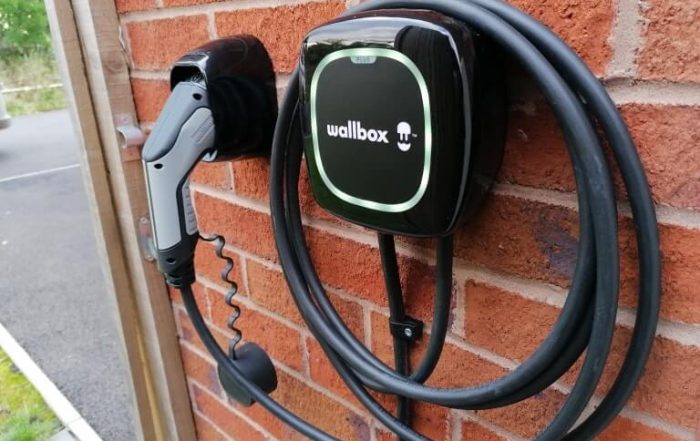
A dedicated 7kW wallbox charger delivers around 25–30 miles of range per hour – meaning most cars charge fully overnight in 8–9 hours. For daily home charging, a wallbox is the only practical solution.

What Does a Home Charger Cost?
A standard 7kW smart wallbox, fully installed, costs between £800 and £1,200 in 2026. That covers the charger unit, cabling back to your consumer unit, mounting and commissioning by a certified electrician.
Additional costs may apply if:
- Your fuse box is old and needs upgrading (add £300–£500)
- The cable run is long or requires groundwork, such as under a driveway (add £200–£600)
- You need a load balancing device if your home supply is limited (add £100–£250)
For most homes with a modern fuse box and straightforward access, the total cost sits towards the lower end of the range.
Can You Get a Grant?
The government’s EV Chargepoint Grant covers up to £500 per socket for tenants and flat owners – increased from £350 in April 2026. Note that homeowners with driveways are no longer eligible for this grant, but landlords installing chargers for tenants can still claim.
All new home chargers must now be smart chargers by law – meaning they can schedule charging automatically and respond to grid signals. This is actually a benefit: smart chargers let you set charging to run during the cheapest off-peak hours.
The Real Running Cost Advantage
This is where home charging makes the financial case for going electric most clearly.
On a standard electricity tariff (around 24p/kWh), charging costs approximately £1,200 per year for 10,000 miles. On a dedicated EV off-peak tariff, that falls to around £300–£400 per year – with some tariffs offering overnight rates as low as 7p/kWh.
Compare that to petrol: a car achieving 40mpg costs approximately £1,600 per year in fuel at current prices for the same mileage. The saving with home EV charging on an off-peak tariff is typically £1,200–£1,300 per year.
Which Charger Should You Choose?
All major smart chargers offer 7kW charging with app control and tariff scheduling. The most popular in the UK in 2026 are:
- Ohme Home Pro – best for automatic tariff-aware charging; integrates with Intelligent Octopus and other EV tariffs to charge at the cheapest possible times without manual input
- Pod Point Solo 3 – reliable, widely installed, and backed by a large UK service network; good value
- Wallbox Pulsar Plus – polished app and strong smart home integration including Alexa and Google Home
- myenergi Zappi V2 – the best choice if you have solar panels, as it can prioritise charging from your own generation
- Easee One – the best-looking charger on the market if design matters to you
All of the above are eligible for the OZEV chargepoint grant where applicable.
What About 22kW Charging?
Some newer EVs – including the Kia EV2 – support 22kW AC home charging, which would charge a typical battery in under three hours. However, 22kW requires three-phase electricity supply, which most UK homes do not have. Upgrading typically costs £1,000 – £3,000 from your Distribution Network Operator and is rarely cost-effective purely for home charging. For most buyers, a 7kW charger is the right choice.
What If You Cannot Charge at Home?
Around 40% of UK households do not have off-street parking. Options are improving:
- On-street lamp post chargers are now available in many UK towns and cities, typically delivering 5–7kW overnight for a modest cost
- Workplace charging is increasingly common; many employers offer free or subsidised charging
- Public rapid chargers (50kW–350kW) are available at motorway services, supermarkets and dedicated hubs – though costs are higher than home charging, typically 50–80p/kWh
If you cannot charge at home and your workplace does not offer charging, a plug-in hybrid (PHEV) may be a more practical choice than a full EV until your charging access improves.